


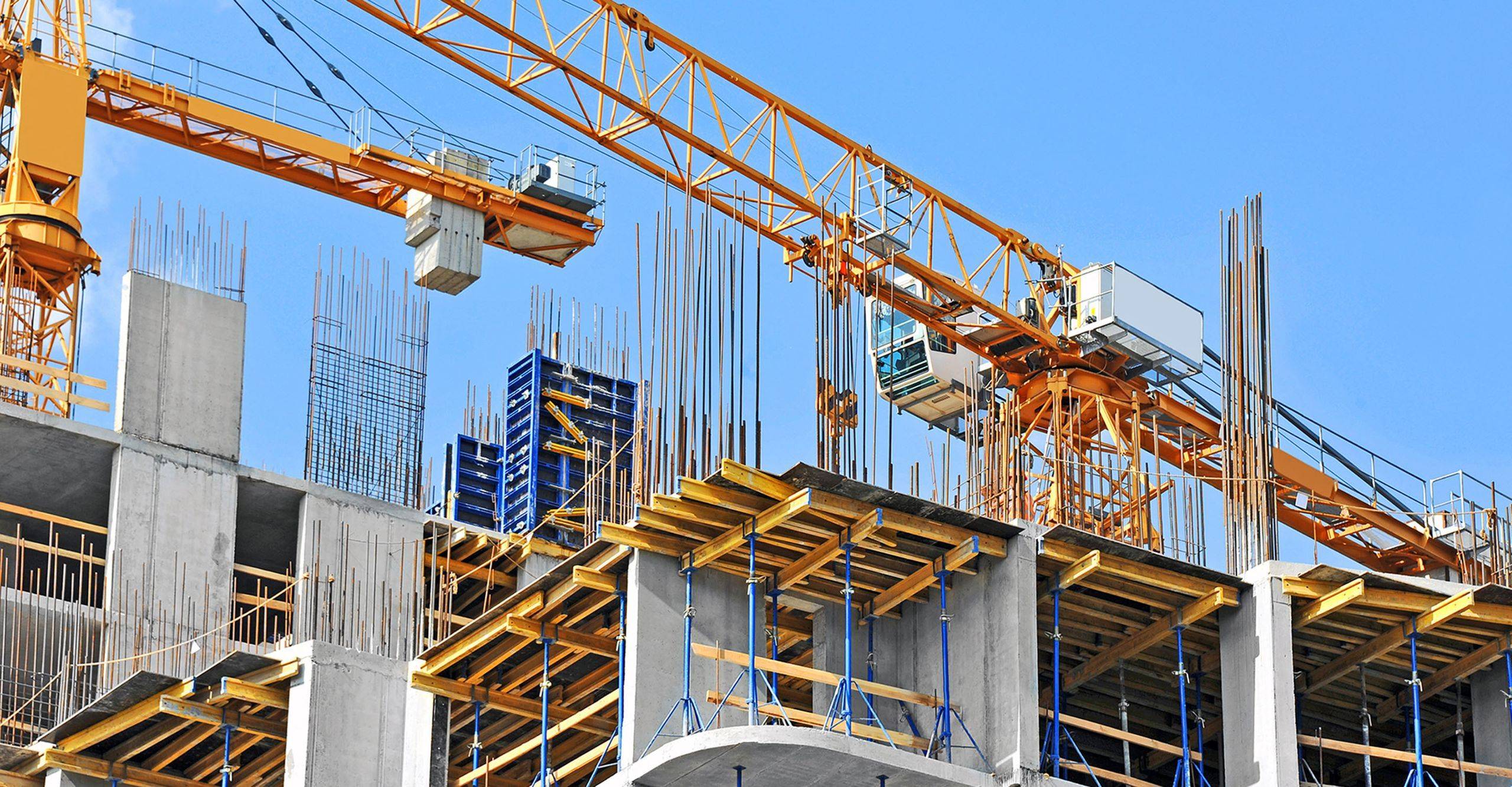
Looking up at a crane on a construction site

Construction Disputes

Construction Disputes

Construction Disputes

Download PDFDownload PDF
Print
Share

Overview

Construction is a dynamic process fraught with complex relationships, sophisticated contracts, financing, design, engineering, procurement, and supply.  It’s a world of unavoidable risk, and no matter how civil the beginning, exposure to such risk all but ensures the need for compromise and the potential for dispute. 

To effectively avoid claims and resolve disputes, construction lawyers must be skilled negotiators, draftsmen, communicators, administrators and advocates.  This combination of skills is precisely why BCLP provides unsurpassed value to its construction industry clients. 

We work with many of our clients at an early stage, preventing problems on site escalating into formal proceedings. We provide practical advice, fight hard when necessary and maintain pressure on the opponents, whilst always looking to achieve the earliest possible resolution, often through proactive use of mediation and other forms of ADR. 

We are extremely experienced at handling matters in a variety of dispute resolution forums, including those that are prevalent in the domestic markets in which we operate (for example mediation, statutory adjudication regimes, or litigation in national or specialist courts). In addition we advise on disputes relating to international projects across many sectors, including large-scale international arbitration across different jurisdictions and under institutional or ad hoc rules, wherever the seat.  

The volume of repeat business from our extensive client list of major industry players (including public and private sector employers, contractors and major specialist suppliers) across a very wide range of sectors and our reputation in the field, is testament to the quality of service we provide.
The Legal 500: Construction Comparative Guide

The Legal 500: Construction Comparative Guide

What are the biggest challenges and opportunities facing the UK construction sector?

From general legal and regulatory compliance obligations, licensing and financial aspects to industry trends and developments, we share insights in this dedicated chapter.

Read our chapter Read our chapter

Meet The Team

Shy Jackson
Shy Jackson
+44 (0) 20 3400 4998

Charles Lilley

Charles Lilley
+971 2 652 0302
James Clarke
James Clarke
+44 (0) 20 3400 3507

Experience

  • Represented major general contractor on regional highway and light rail project administration and litigation including judgment on fraud and veil-piercing claims against subcontractor.
  • Represented a US hotel developer in multiple lawsuits and arbitration proceedings relating to design, construction defect and delay claims.
  • Acted in a dispute between the owners and developers of a container port in the Middle East and the contractors responsible for building an extension to the port.
  • Advising in relation to one of the largest PFI contract disputes in the health sector. The advice included wide ranging issues of a complex nature arising out of the Project Company’s performance at two hospitals run by a NHS Foundation Trust, which is one of the largest in the UK  with a turnover in excess of £1billion.
  • Providing project advice to a UK university and acting on its behalf in a number of claims brought by four of the contractors involved in delivering this major mixed-use development,  including infrastructure, student accommodation, retail and community building contractors.

Related Insights

Insights
Jan 07, 2026

Conditions Precedent and deemed fulfilment

Conditions precedent play an important role in contracts and it is often said that a party cannot benefit from its own breach. But in King Crude Carriers SA and others v Ridgebury November LLC and others [2025] UKSC 39, the Supreme Court rejected a principle from a House of Lords decision dating back to 1881, concerning whether a party can wrongfully, and in breach of contract, prevent the fulfilment of a condition precedent to that party’s payment obligation such that the innocent party cannot make a simple debt claim. In this BCLP Insight, we examine the case and consider the key takeaways.
Insights
Jan 07, 2026

Key Takeaways from the Third Grenfell Progress Report

On 17 December 2025, the government published the third Grenfell Tower Inquiry Government Progress Report (Progress Report) in addition to the Single Construction Regulator prospectus and consultation, the fire engineering authoritative statement and next steps document, the findings of the Building Safety Regulator’s review of the higher-risk building definition and an Implementation timeline. The Progress Report tracks progress against the government’s February 2025 Response to the Grenfell Tower Inquiry’s Phase 2 report (February Response) which contained extensive commitments to reform the current building safety regime (see this BCLP Insight for more detail). The construction sector had been waiting for most of 2025 for further insights as to what and how the regime may change so it is pleasing that the Report and accompanying publications provide more detail on the government’s plans for reform. This Insight considers the key takeaways from the publications.
Insights
Jan 06, 2026

Freezing orders to enforce adjudication decisions

Insolvency is one of the risks to consider when looking to enforce an adjudicator’s decision, but sometimes there is also a concern that a party might take steps to dissipate its assets to avoid payment. The way to address such a risk is to obtain what is known as a freezing order, which is an injunction stopping a party from transferring, selling or dealing with its assets, until a judgment is satisfied. This is not a common procedure in adjudication, but a decision from December 2025, High Tech Construction Ltd v WLP Trading and Marketing Ltd [2025] 3209 (TCC) provides a useful example of how that would work in practice and the legal tests to be applied.  
Insights
Dec 18, 2025

CMA’s interim report into road and rail civil engineering

In July we wrote about the Competition and Markets Authority's proposed study into the road and rail sectors, aimed at supporting the government’s ambitious 10-year strategy for infrastructure growth. The CMA has now published its interim report, setting out its emerging findings and possible remedies. The CMA’s final report is due to be released in April 2026 and the focus is on how market interactions between public bodies and the business supply chain can best incentivise cost-effective delivery of rail and road infrastructure. It also considers whether public procurement and regulatory processes could make it easier for firms to enter, expand, invest and innovate. As noted in the interim report, rail and road,  excluding HS2, accounted for 70-75% of government expenditure on economic infrastructure in 2022 and in 2023-24 the total annual expenditure on public roads was expected to be about £10.3 billion, with about £8.7 billion spent on railways. Importantly, whilst the focus is on the road and rail sectors, the CMA has previously stated that its “findings may identify lessons that may be equally as informative for civil engineering in other areas of economic infrastructure”.
Insights
Dec 18, 2025

Unjust enrichment in construction

Claims based on restitution and unjust enrichment are not common in a commercial context when there will almost always be some form of agreement that governs the parties’ rights and obligations. But in October 2025 there were two decisions that dealt with claims for unjust enrichment, one of which concerned the FIDIC form of contract. This is therefore a useful opportunity to look again at when and how such claims might exist in a construction context.
Insights
Oct 22, 2025

Staying enforcement of an adjudicator's decision

A party holding a favourable adjudication decision can apply to the court for summary judgment to enforce it but, in very limited circumstances, the losing party can also seek a stay of enforcement, according to the principles set down in Wimbledon Construction Co 2000 Ltd v Vago [2005] EWHC 1086 (TCC). (For more information, see Practice note, Adjudication: challenging and staying enforcement of the adjudicator's decision.) In this article, first published in PLC, Marcus Birch considers the decision in Providence Building Services Ltd v Hexagon Housing Association Ltd
News
Oct 16, 2025

Best Law Firms 2026 - France

Related Insights

Insights
Jan 07, 2026
Conditions Precedent and deemed fulfilment
Conditions precedent play an important role in contracts and it is often said that a party cannot benefit from its own breach. But in King Crude Carriers SA and others v Ridgebury November LLC and others [2025] UKSC 39, the Supreme Court rejected a principle from a House of Lords decision dating back to 1881, concerning whether a party can wrongfully, and in breach of contract, prevent the fulfilment of a condition precedent to that party’s payment obligation such that the innocent party cannot make a simple debt claim. In this BCLP Insight, we examine the case and consider the key takeaways.
Insights
Jan 07, 2026
Key Takeaways from the Third Grenfell Progress Report
On 17 December 2025, the government published the third Grenfell Tower Inquiry Government Progress Report (Progress Report) in addition to the Single Construction Regulator prospectus and consultation, the fire engineering authoritative statement and next steps document, the findings of the Building Safety Regulator’s review of the higher-risk building definition and an Implementation timeline. The Progress Report tracks progress against the government’s February 2025 Response to the Grenfell Tower Inquiry’s Phase 2 report (February Response) which contained extensive commitments to reform the current building safety regime (see this BCLP Insight for more detail). The construction sector had been waiting for most of 2025 for further insights as to what and how the regime may change so it is pleasing that the Report and accompanying publications provide more detail on the government’s plans for reform. This Insight considers the key takeaways from the publications.
Insights
Jan 06, 2026
Freezing orders to enforce adjudication decisions
Insolvency is one of the risks to consider when looking to enforce an adjudicator’s decision, but sometimes there is also a concern that a party might take steps to dissipate its assets to avoid payment. The way to address such a risk is to obtain what is known as a freezing order, which is an injunction stopping a party from transferring, selling or dealing with its assets, until a judgment is satisfied. This is not a common procedure in adjudication, but a decision from December 2025, High Tech Construction Ltd v WLP Trading and Marketing Ltd [2025] 3209 (TCC) provides a useful example of how that would work in practice and the legal tests to be applied.  
Insights
Dec 18, 2025
CMA’s interim report into road and rail civil engineering
In July we wrote about the Competition and Markets Authority's proposed study into the road and rail sectors, aimed at supporting the government’s ambitious 10-year strategy for infrastructure growth. The CMA has now published its interim report, setting out its emerging findings and possible remedies. The CMA’s final report is due to be released in April 2026 and the focus is on how market interactions between public bodies and the business supply chain can best incentivise cost-effective delivery of rail and road infrastructure. It also considers whether public procurement and regulatory processes could make it easier for firms to enter, expand, invest and innovate. As noted in the interim report, rail and road,  excluding HS2, accounted for 70-75% of government expenditure on economic infrastructure in 2022 and in 2023-24 the total annual expenditure on public roads was expected to be about £10.3 billion, with about £8.7 billion spent on railways. Importantly, whilst the focus is on the road and rail sectors, the CMA has previously stated that its “findings may identify lessons that may be equally as informative for civil engineering in other areas of economic infrastructure”.
Insights
Dec 18, 2025
Unjust enrichment in construction
Claims based on restitution and unjust enrichment are not common in a commercial context when there will almost always be some form of agreement that governs the parties’ rights and obligations. But in October 2025 there were two decisions that dealt with claims for unjust enrichment, one of which concerned the FIDIC form of contract. This is therefore a useful opportunity to look again at when and how such claims might exist in a construction context.
Awards
Nov 10, 2025
Firm wins ‘Corporate Team of the Year’ at Inaugural Law Middle East Awards 2025
Insights
Oct 22, 2025
Staying enforcement of an adjudicator's decision
A party holding a favourable adjudication decision can apply to the court for summary judgment to enforce it but, in very limited circumstances, the losing party can also seek a stay of enforcement, according to the principles set down in Wimbledon Construction Co 2000 Ltd v Vago [2005] EWHC 1086 (TCC). (For more information, see Practice note, Adjudication: challenging and staying enforcement of the adjudicator's decision.) In this article, first published in PLC, Marcus Birch considers the decision in Providence Building Services Ltd v Hexagon Housing Association Ltd
Insights
Oct 20, 2025
A First Look at Saudi Arabia’s New Draft Arbitration Law
News
Oct 16, 2025
Best Law Firms 2026 - France